Early Days of Empire Bay Ferry Services
In the early days, isolated pockets of Brisbane Waters were heavily dependent on water transport. In the Empire Bay neighbourhood two, highly competitive ferry services, the Orphanage Ferry service and the Growers Ferry service fought for passengers and cargo.
The Sisters of the Order of Saint Joseph of the Sacred Heart had an orphanage for boys at South Kincumber since 1887. For the first 18 years, the Sisters had to rely on boys to crew their rowboat to get their farm produce to Woy Woy.
The Orphanage Ferry Service
In 1905, the Sisters bought a motor launch, Maris Stella, 26 feet and 5 hp Victor motor, and introduced the first ferry service in the Brisbane Water. Initially, the Maris Stella was a produce carrying boat. The Orphanage ferry route included wharfs at Kincumber South, Bensville, Palmers Lane, Shelly Beach Wharf, Empire Bay, Davistown, and Veterans Hall. The Orphanage ferry service became popular.
The coming of the railway at the end of 1880s opened the Empire Bay, Davistown, and Kincumber area as a holiday destination. Ferry transport of some kind was essential both for residents and visitors needing to get to their homes and holiday cottages. There was also farm produced to be transported to the railway. It soon became apparent that a bigger motor launch was an urgent need.
What had started out as one motorised ferry to carry produce soon became a passenger carrying business of some size. Over the next 67 years, the ferry service increased it’s fleet to seven vessels.
In 1960, the Sisters sold their ferry service to Stan Smith (financially helped by the Woy Woy Chamber of Commerce) who continued to run the Kincumber ferry service until 1972 when maintenance costs and competition from the buses forced Stan to close it down.
The Growers Ferry Service
Early 1921 the local farmers had become dissatisfied with the Orphanage ferry service and decided to form a Kincumber Growers Cooperative Ferry service for the carrying of their own produce. Their first ferry, Kincumber, was joined a few years later by another ferry, Grower. By this time both services were carrying produce and passengers. Competition was fierce.
Competing deck hands would be waiting at the Woy Woy station to grab the disembarking passengers to fill their respective ferries.
Sadly, with wartime fuel rationing and maintenance costs, the Growers Ferry service closed in 1944.
Brisbane Waters Ferry Service
With the closing of the Orphanage Ferry service in 1972, it was twenty years before another attempt was made to service Empire Bay. In 1992 Brisbane Waters Ferry Service (various owners Glen Davis, Warren Lane, and D Livingston), with the ferries MV Banksia and MV Corella, was established. The BWFS serviced the Empire Bay run until costs and problems with the NSW Transport contract forced it to cease operations in 2001.There was an uproar by the locals, petitions signed and public meetings at Davistown, and with help from the local Members the service was put out to tender. It was almost 2 years before a replacement service was back in place.
Central Coast Ferry Service
In 2003 Jon Kirk established Central Coast Ferries (the Empire Bay – Woy Woy service) and in August 2003 the Saratoga ferry arrived with much fan fair and the Empire Bay ferry service was again open for business.
In 2006, George and Bets Conway took over the business and, with their sons Toby, Mark and Tim involved in the business at times, have run it as a passenger service ever since. Over the past 16 years George & Bets have added two additional vessels to the service. The vintage vessel, Kodock, and a charter vessel, Sorrento, bringing their fleet to three. In their heyday, the Conways carried up to 6,000 passengers a month and employed 2 full time and five casual skippers as well as several deckhands.
The Conway’s have faced numerous challenges, including Covid, the loss of their mooring at Empire Bay Marina, and an 11-year battle with Council to replace the Woy Woy wharf. Another ongoing challenge is the disparity between fares. “We can't accept the Opal card or offer pensioner excursions and the family travel incentives,” said Bets. Today the Conways are taking things day by day, rolling with the punches and looking towards a more promising future, signalled by strong patronage of their ferry service during the festive season. It's still a viable business because of the government contract. Bets said “I think resilience is key to our success. We are very proud to be owners of this business and passionate about what we've done as a family.”
We should all continue to support our ferry service; it is a unique asset at our doorstep and offers Empire Bay residents a special link back to our past.
Robert Thompson
Source: George & Bets Conway, “A History of Ferries on the Central Coast” by Gwen Dundon, Central Coast Business Review February 2022, “Ferries of Sydney” by Graeme Andrews.
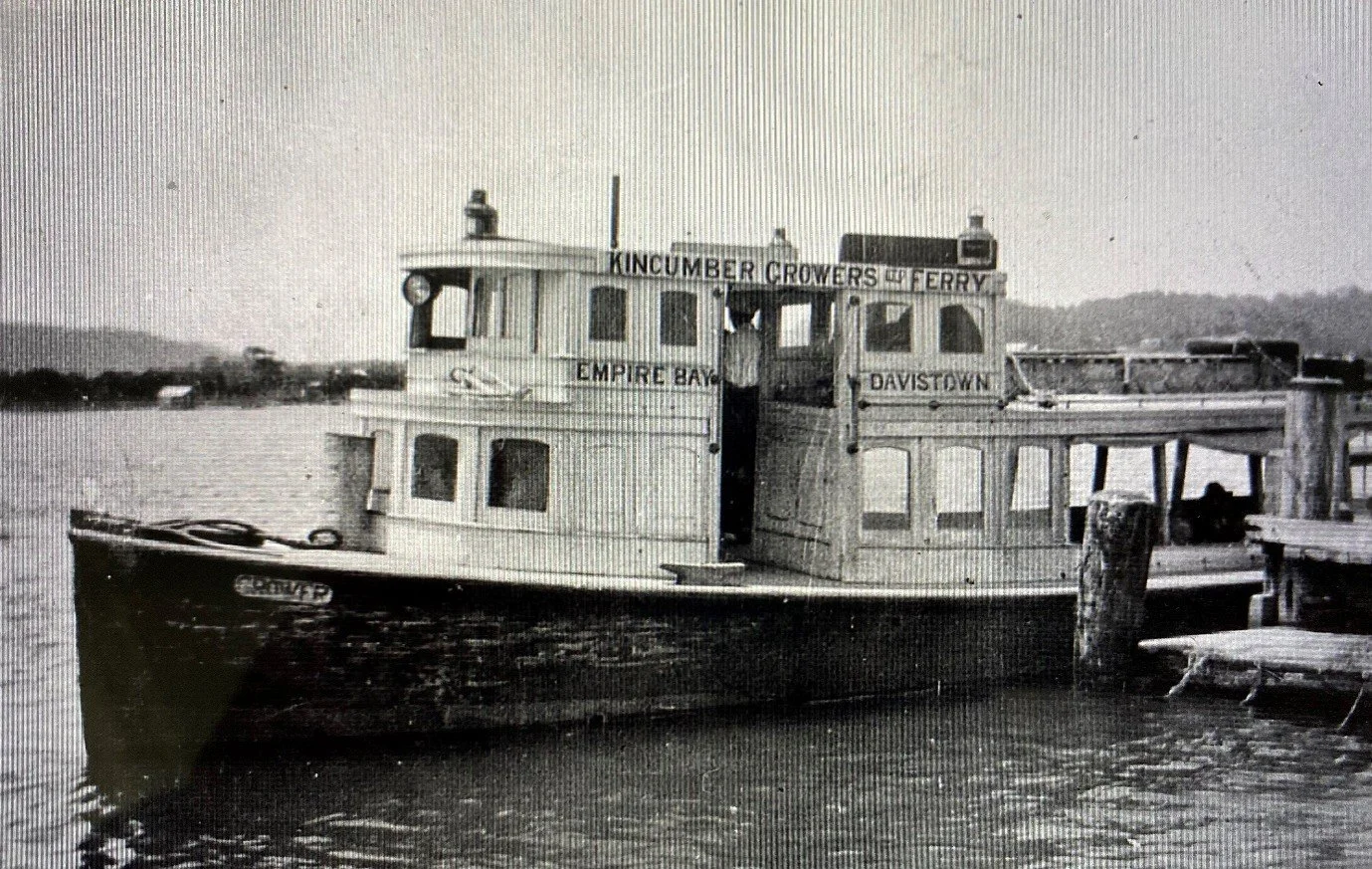
MV Grower, part of the Kincumber Growers Co-Operative ferry fleet (1921-1944).
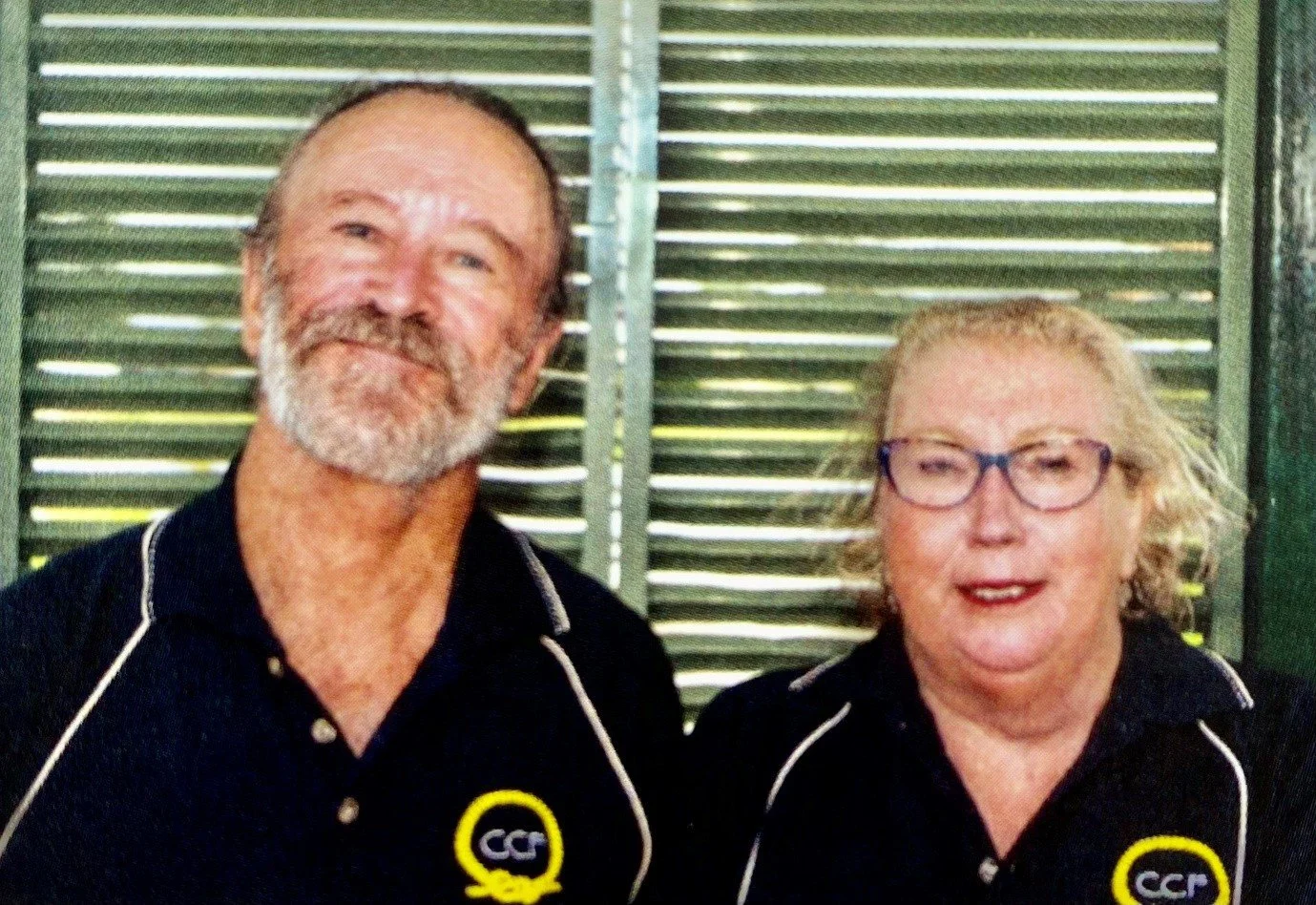
George & Bets Conway, owners of Central Coast Ferries.